Sewer Line Repair & Replacement in Chicago
A broken sewer pipe rarely gives you a polite warning. It shows up as the same basement backup after every rodding, a soggy patch in the yard, or camera footage of clay pipe that has cracked, sagged, or caved in. Rodding Rooter provides sewer line repair in Chicago for homeowners, landlords, and businesses who need the damaged section fixed properly and want to understand the price before anyone starts digging.
Every repair starts with a sewer camera inspection, so you see the problem on screen. Then we walk you through your options, from a single spot repair to full sewer line replacement, with a clear estimate before any work begins.
When a Sewer Line Needs Repair, Not Another Rodding
Rodding and hydro jetting clear what is inside a pipe. They can’t fix the pipe itself. When the line is cracked, offset at a joint, sagging into a low “belly,” or partly collapsed, waste keeps catching on the damage and the backups return. At that point, another cleaning only buys time.
In most Chicago homes, the pipe in question is the private building sewer. It runs from your foundation, under the yard or parkway, to the city main in the street. Many of these lines are older clay tile or cast iron laid in short sections, and every joint is a spot where roots, ground movement, and age can open a gap. A broken sewer pipe or collapsed sewer line is a repair problem, and it usually gets more expensive the longer it waits.
Signs Your Sewer Line May Be Broken or Collapsed
- Backups that return within weeks of a professional rodding
- Water rising from the basement floor drain when fixtures upstairs are used
- A rodding cable that stops at the same distance every time
- Sewage odor in the basement or yard with no clog you can find
- Soggy, sunken, or unusually green patches along the sewer route
- Soil, gravel, or pieces of clay pipe coming back on the cable
Any one of these is worth a camera look. Several together usually point to structural damage rather than a simple clog.
Our Sewer Line Repair Process
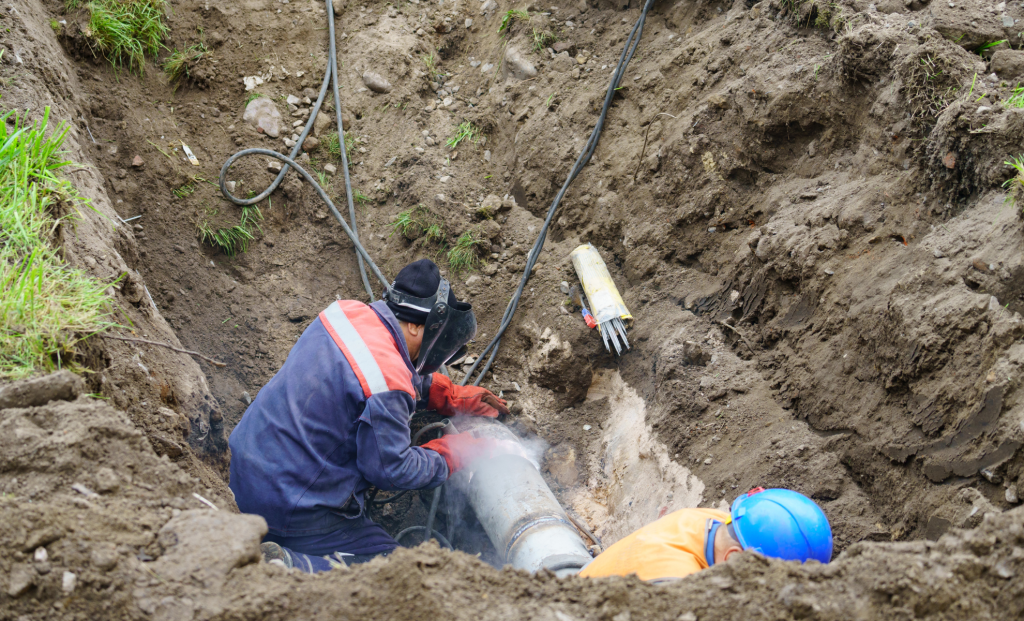
A big-ticket repair deserves evidence, not guesswork. Our process is built so you know what is wrong, where it is, and what each option costs before you commit to anything.
1. Camera inspection
We run a camera through the line from the cleanout to find the damage and identify it: a crack, an offset joint, a belly, a root entry point, or a collapse.
2. Locate and measure
We note how far along the line the problem sits and roughly how deep it is. That decides which repair methods are possible and what the job will cost.
3. Explain your options
We explain the footage in plain language, lay out the repair methods that fit your line, and give you a clear estimate before any work begins.
4. Repair or replace
We fix the damaged section or replace the line using the method you chose, and keep the work area as tidy as the job allows.
5. Test and verify
We run water through the finished line and check it on camera, so you can see the repair is sound and the pipe is flowing.
Sewer Repair Options: Spot Repair, Trenchless, or Full Replacement
No single repair fits every damaged line. The right choice depends on how much of the pipe is failing, what it is made of, and what sits above it.
Sewer Spot Repair
When the camera shows one bad section, such as a cracked hub or a short collapsed run, a sewer spot repair replaces just that piece. It is usually the least expensive fix, and it makes sense when the rest of the line is in reasonable shape.
Trenchless Sewer Repair
Trenchless methods repair or replace the pipe through small access points instead of one long open trench. Depending on the line, that can mean lining the old pipe from the inside or pulling new pipe through the path of the old one. Trenchless sewer repair in Chicago can spare lawns, driveways, and parkway surfaces, but not every line qualifies. Severe collapses, deep sags, and some layouts still need excavation.
Full Sewer Line Replacement
When damage runs along much of the line, repeated spot repairs stop making financial sense. Sewer line replacement in Chicago swaps the old clay or cast-iron pipe for new pipe, ending the cycle of recurring backups on that stretch.
Sewer Line Repair Cost in Chicago: What Sets the Price
We don’t quote a flat sewer repair price over the phone, because two lines on the same block can need very different work. Once the camera has shown us the problem, these are the factors that move the number:
| Cost factor | Why it matters |
|---|---|
| Length of damaged pipe | A short spot repair costs far less than replacing the full run. |
| Depth and location | Deeper pipe, or pipe under a driveway, patio, or parkway, takes more labor to reach. |
| Repair method | Trenchless and open-trench repairs are priced differently, and not every line suits both. |
| Pipe material and condition | Brittle clay or corroded cast iron can limit which methods are possible. |
| Permits and restoration | Required permits and putting the surface back are part of the full job cost. |
You get a clear estimate with the method spelled out before work begins, with no hidden charges. If a break sits under the sidewalk or street, ask us about the City’s Private Drain Program, which may repair drains broken under the public way at no cost for residences of up to four units.
Sewer Repair for Chicago Homes and Buildings
We repair sewer lines for single-family homes, two-flats and three-flats, multi-unit apartment buildings, and commercial properties across the city. Landlords and property managers get the same clear footage and side-by-side options, which makes it easier to compare quotes and explain the decision to owners or tenants.
A repair is often one part of a bigger picture. If roots caused the damage, tree root removal clears the line before work starts. If you need the line open today, sewer rodding can restore flow while you plan the repair. After the repair, periodic sewer cleaning helps keep the new pipe running clear. You can see everything we do on our plumbing services page.
Why Chicago Property Owners Choose Rodding Rooter
20+ years of experience
Our team has spent more than 20 years working on Chicago’s clay and cast-iron sewer lines. Learn more about Rodding Rooter.
Proof before you pay
You see the damage on camera before we recommend any repair, so the decision is based on facts.
Transparent pricing
You get an honest estimate before work begins, with no hidden charges or surprise bills.
Options, not upsells
If a spot repair will do the job, we say so. We won’t push a full replacement your line doesn’t need.
Same-day service
We work to get a technician out the same day to diagnose the problem and clear an active backup.
Sewer Line Repair Throughout Chicago
Rodding Rooter repairs and replaces sewer lines throughout Chicago. Much of the city’s housing was built when clay tile and cast iron were standard, and decades of freeze-thaw cycles, shifting soil, and parkway tree roots take a toll on those joints.
Sewer work in Chicago is regulated. The Department of Buildings issues sewer permits to licensed drainlayers, and we explain which requirements apply to your repair as part of the estimate. Contact our team to check availability at your address.
Get a Clear Sewer Line Repair Estimate in Chicago
A damaged sewer line won’t fix itself, but you shouldn’t have to make a big decision blind. Rodding Rooter pairs camera-verified diagnosis with upfront pricing and repair options that fit your line and your budget. Call (773) 588-1200 to schedule an inspection, or request an estimate online. If sewage is backing up right now, our 24/7 emergency plumber service can clear the line first.
Sewer Line Repair FAQs
Cost depends on how much pipe is damaged, how deep it is, what sits above it, the repair method, and permits. A spot repair usually costs far less than a full replacement. We give you a clear estimate after a camera inspection, before any work begins.
If the camera shows one or two damaged sections and the rest of the pipe is sound, a spot repair is usually the practical choice. If cracks, sags, or root entry points run along much of the line, replacement often costs less over time than repeated repairs.
Trenchless repair fixes or replaces a sewer pipe through small access points instead of a full-length trench, usually by lining the old pipe or pulling new pipe through its path. It limits digging, but it isn't possible for every line.
Backups that return soon after rodding, a cable that stops at the same spot, and soil or pipe fragments on the cable are common signs. A sewer camera inspection is the reliable way to confirm a collapse and find its location.
Often, yes. A sewer spot repair replaces only the damaged section when the rest of the line is in good condition. The camera footage shows whether that approach makes sense.
Property owners are generally responsible for the sewer drain on their own property. Through the City's Private Drain Program, the City may repair drains broken under the public way for residences of up to four units.
Most sewer work in Chicago requires a permit from the Department of Buildings, which issues sewer permits to licensed drainlayers. We explain which requirements apply to your job during the estimate.
It depends on the length of pipe involved, its depth, the repair method, and any permits or surface restoration. A single spot repair is a much shorter job than a full replacement, and we give you an expected timeline with your estimate.
Roots usually enter through existing cracks or loose joints, then widen the gap as they grow. Over time that can crack or displace a section of pipe. Cutting the roots clears the line, but repairing the entry point is the long-term fix.