
Wilmette is a village that looks the way people imagine a North Shore suburb should: quiet streets, handsome older homes and trees that have had decades to grow. Those trees are a big part of what makes the village special. They’re also behind a lot of sewer calls.
If you’ve been told you have roots in your sewer line, or you suspect you do, this guide is for you. We’ll explain how roots get into the pipe, what removal involves, how the main options compare and what you can do to slow the next round of growth.
We’re Rodding Rooter, and we’ve cleared roots from sewer lines around Chicago and the North Shore for more than 20 years. We’ll keep it practical and honest, including the parts that aren’t what you’d hope to hear.
How roots find your sewer line
Roots aren’t looking for sewer pipes. They’re looking for water and nutrients. A sewer line is a perfect target when it leaks, even a little, because the escaping moisture and nutrients form a trail that roots follow.
A joint with a small gap, a hairline crack or a slightly offset connection is all it takes. A fine root slips in, finds a steady supply of water and keeps growing. Over a season or two, it branches into a net of fine roots that spreads along the pipe and catches paper, grease and debris like a filter. Eventually the line is mostly root, and water has to push past it.
Older clay tile and cast iron lines have more joints and more weak spots, which is why root problems are so common in older neighborhoods. A tight, modern plastic line with sealed joints gives roots very little to work with. Our guide on tree roots in your sewer line goes through the basics, and this post focuses on what’s different for Wilmette.
Why Wilmette properties see so many root problems
We don’t want to overgeneralize, since every lot is different. But several features of Wilmette make roots a regular topic.
- Mature trees. Much of the village has well-established oaks, maples and other large trees, many of them planted decades ago.
- Older homes. Many Wilmette houses were built in the early and middle twentieth century, and their sewer lines may be original or partly original.
- Generous lots. Larger lots can mean longer private sewer lines, with more joints and more distance for roots to reach.
- Parkway trees. Trees between the sidewalk and the street can have roots that spread under the line that connects to the village sewer.
None of this means your line is bad. It means that if you have a large tree near the line and an older pipe, a root problem is more likely than average, and a periodic check is a sensible habit.
Signs roots are in your line
Root problems tend to develop slowly, and the signs are easy to explain away at first.
- Slow drains that come and go over months.
- Gurgling toilets or tubs when another fixture runs.
- A backup that clears with a plunger or cleaner, then returns.
- Water or sewage in a basement floor drain.
- A sewer smell near the cleanout or in the yard.
- Backups that appear during or after heavy rain.
- A particular season, often spring or summer, when problems worsen.
Our guide to the signs you need professional sewer rodding explains each symptom. If you notice more than one, the main line is the likely culprit.
Why spring and summer matter
Roots grow most actively when the weather warms. The ground thaws, moisture is plentiful and trees put energy into new growth, both above and below ground. A line that was fine in January may be partly blocked by June.
That’s why many of our Wilmette root calls come in the warmer months, and why spring is a smart time to catch a problem early. If you’ve had root trouble before, or your home is older, a camera look in spring can show whether roots are present and how much they’ve grown.
How tree root removal works
Removing roots from a sewer line is a job for a powered cable with a cutting head. Here’s how a visit typically goes.
- We ask questions. Which drains are affected, how long it’s been happening and what’s been done to the line before.
- We find the access point. Usually a basement cleanout. On longer lines, a second access may help us reach the full length.
- We run the cable. The cutting head chops through roots as it moves along the pipe, clearing a channel for water.
- We test the flow. Running water through the line shows whether it’s open.
- We explain what we found. How heavy the roots were, where they entered and what we’d suggest next.
You can read more about the service on our tree root removal page and our sewer rodding page.
Rodding, jetting or repair: how the options compare
Once roots are in the line, there are three broad approaches. They solve different problems, and the right one depends on what the pipe looks like.
Rodding: clear the roots now
Rodding is the fastest way to restore flow. The cutting head removes the roots in the line, and water moves again. The roots outside the pipe, and the opening they came through, remain, so regrowth is likely over time.
Hydro jetting: clean the pipe
Hydro jetting uses high-pressure water to scour the pipe wall and clear debris and some root material. It’s often used for grease and scale, and it can be useful after rodding to leave the pipe cleaner. Our post on rodding versus hydro jetting compares the two, and you can read about the service on our hydro jetting page.
Repair: close the opening
If roots keep returning, the real fix is to seal the entry point. That might mean repairing a joint, lining a section or replacing a damaged length of pipe. We explain what that can involve on our sewer line repair page. A repair costs more than a cleaning, which is why we recommend a camera inspection first, so you know exactly where and how much.
Which one do you need?
If this is the first time roots have caused a backup, rodding is usually the right first move. If it happens again within a year or two, take a look with a sewer camera. If the camera shows open joints or damage, repair is likely the lasting answer. If it shows a healthy pipe with light, occasional roots, a maintenance schedule may be enough.
What about chemical root treatments?
You may have seen products sold to kill roots in sewer lines. Some professional treatments exist, and some people use them as part of a maintenance routine. We’re cautious about them, for a few reasons. They don’t repair the opening where roots enter. Some products can be hard on pipes or the environment, and rules about their use vary. And if the line is already heavily blocked, a cable is needed first.
If you’re curious about a treatment, ask the company to explain what’s in it, how often it needs repeating and what regulations apply. A good company will answer plainly and won’t pressure you.
How to slow regrowth
You can’t stop roots entirely, but you can make your line less attractive and your trees less of a threat.
- Know where the line runs. A camera inspection can show its path and depth.
- Be careful with new trees. Before planting, think about where the sewer line is. Large trees planted right over it are a long-term problem.
- Fix open joints. If the camera shows a source of leakage, repairing it removes the invitation.
- Schedule maintenance if roots keep returning. A cleaning every year or two can cost less than an emergency. Our post on how often to clean your sewer line explains how to decide.
- Check with the village before touching parkway trees. Trees in the public right-of-way are generally not yours to cut, and rules vary.
Removing a healthy mature tree is rarely the right move. Trees add value to a property and to the neighborhood, and a well-managed sewer line can coexist with them.
A spring root check for Wilmette homeowners
If you’d like a simple routine to follow, this one works for most homes with large trees nearby. It takes a little time and can save you a lot of trouble.
- Walk the yard. Look for large trees within about the spread of their canopy of where your sewer line runs. If you don’t know the path, a camera inspection or a look at your property records can help.
- Listen to your drains. Run water in a few fixtures and listen for gurgling or slow drains. Note which fixtures are slow.
- Check the cleanout. Make sure the cap is accessible and in good condition. If it’s cracked or missing, mention it to your plumber.
- Think back over the last year. Any backups, slow spells or unusual smells? Write them down, even if they went away.
- Decide whether to look. If there’s been more than one slow spell, or the home is older, a camera look in spring is a sensible step.
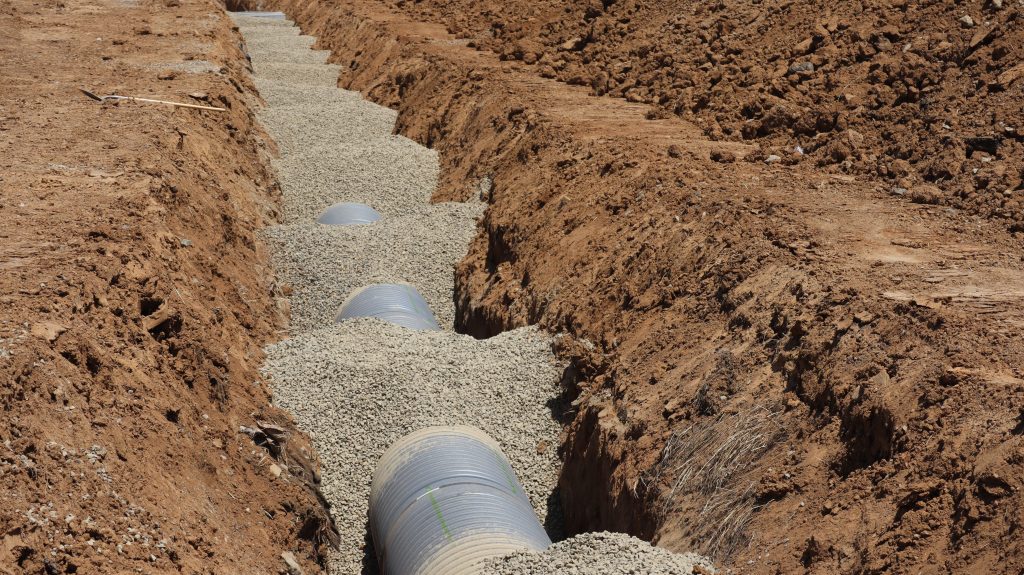
[img:602|Crew digging a trench to reach a buried sewer pipe|When damage is found, a repair can be planned around the exact spot rather than guessed at.]
For many homes, that routine ends with “everything looks fine.” That’s a good result, and it gives you a baseline for next year.
What a Wilmette root call looks like in practice
To make this concrete, here’s a typical pattern, described in general terms and not as any one customer. A homeowner with a large tree in the front yard has noticed that the basement laundry drain is slow every summer. This year it started gurgling, and then the floor drain bubbled after a storm.
When we run a cable through the line, it meets resistance about a third of the way to the street. The cutting head works through a thick mass of roots, and a lot of fine, stringy material comes out on the cable. After that, the water flows freely. We flush the line, explain what we found and suggest a camera inspection, since this is the second summer the problem has appeared.
The camera shows roots entering at two joints. The homeowner now has a choice: keep clearing the line every year or two, or repair the joints. We lay out both options, the likely costs and the trade-offs, and let them decide. That’s what a good root removal visit looks like: a clear line today and a clear plan for tomorrow.
Who is responsible for the line?
In general, the village looks after the main in the street, and the owner looks after the private line from the house to the main. Where the line crosses the public right-of-way, the details can be less obvious. If you’re not sure, Wilmette’s public works department can confirm the boundary for your address. It’s worth asking before you commit to a major repair.
What does it cost?
We can’t give you a single number. The length of the line, how heavy the roots are, how easy the access is and what you want done afterward all matter. You’ll get an estimate before work begins, and we’ll explain what it covers. Our guide to the average cost of sewer rodding explains the factors in detail.
Call Rodding Rooter in Wilmette
If roots are your concern, or you’d like to know the state of your line before summer, call (773) 588-1200 or send a message. We’ll ask what you’re seeing, explain what to expect and give you an estimate before we start. Same-day service is often possible, and emergency calls are answered day or night. You can read more about where we work on our Wilmette service page.
Good trees and a good sewer line can live together. It just takes a bit of attention below the ground.
Wilmette tree root questions
How do tree roots get into a sewer line?
Roots follow moisture and nutrients. A small crack or loose joint in a sewer line leaks both, and roots slip in and grow into a mass that catches paper and grease.
Will rodding remove tree roots from my sewer line?
Yes, a cutting head clears roots from the pipe and restores flow. Roots can regrow through the same opening, so a camera inspection helps you decide whether a repair is needed.
Do I have to remove my tree to fix the problem?
Usually not. Most root problems are solved by clearing the line, sealing the entry point if needed and keeping up with maintenance. Removing a healthy tree is rarely the right answer.
How often do roots come back?
It varies with the tree, the pipe and the season. Some lines need attention every year or two, others rarely. A camera inspection shows how active the roots are.
Is hydro jetting better than rodding for roots?
Rodding is often the quickest way to cut through roots. Jetting cleans the pipe wall and can follow rodding. The best choice depends on what the camera or cable finds.
Who handles tree roots in the street or parkway?
Trees in the public right-of-way are generally managed by the village, and rules vary. Check with Wilmette public works before cutting or planting near the street.